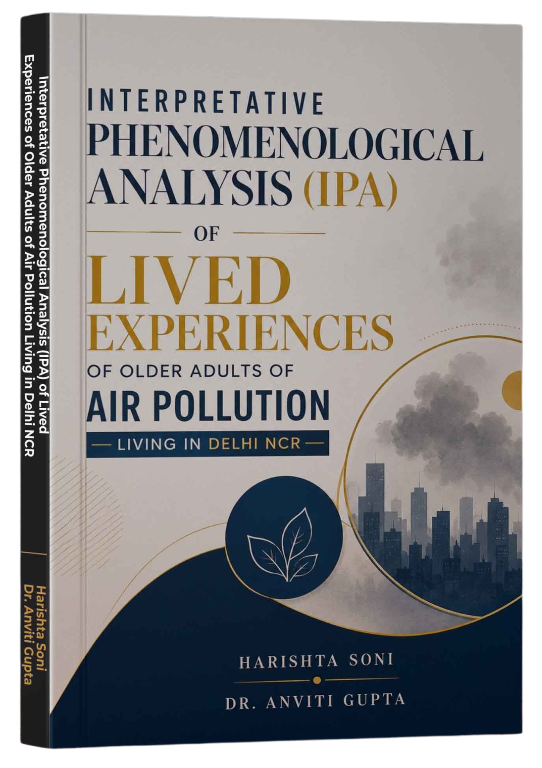
This work examines how prolonged air pollution affects the lived experiences of older adults in Delhi NCR. Using Interpretative Phenomenological Analysis and in-depth semi-structured interviews with twelve participants, it explores the physical, psychological, emotional, social and existential dimensions of environmental exposure. The study identifies six interconnected themes: embodied suffering, restricted mobility, emotional distress, loss of identity and autonomy, environmental grief and place loss, and the tension between resignation and resilience. It presents pollution not simply as a health hazard but as a condition that reshapes daily routines, relationships, independence, well-being and attachment to place. The work also considers implications for age-friendly environmental policies and future research.
See what readers think about this book.
Be the first reader to share your thoughts.
Help other readers by writing a review.